
The Lantern Keeper | July 7, 2025
In Paris, food isn’t just about the meal.
It’s about where it comes from, how it’s chosen, prepared, and shared. Part I traced the rhythm of the day and the social rituals that frame Parisian eating, now this second part explores what’s on the plate: the ingredients, choices, and philosophies that shape the Parisian table.
Markets: The Everyday Ritual of Choosing Well
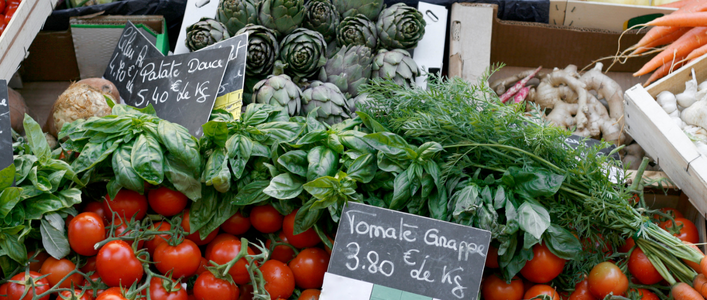
To understand Parisian eating, let’s begin at the markets. Not the glossy supermarket aisles, but the cobbled, open-air gatherings that spring up across arrondissements several days a week, offering fresh, local, and seasonal food. Markets in Paris are less about convenience and more about connection — between buyer and vendor, season and produce, taste and memory.
Paris is home to around 82 open-air markets and 13 covered markets, spread across every arrondissement (district). For most Parisians, visiting these markets weekly or even more frequently is part of their everyday life.
Around 15–25% of French consumers identify as éco-consommateurs, intentionally choosing organic, local, or fair-trade products. The slow food movement and sustainability trends have taken root here not through slogans, but through regular, consistent gestures: choosing the cheese made just outside the city, the apples from Normandy, the eggs marked “plein air.”
This habit reflects more than nostalgia; it’s a way of affirming quality, seasonality, and rhythm. A tomato bought from a market stall in June tastes like a tomato should taste: sun-warmed, firm, juicy and slightly sweet, and stands worlds apart from the winter versions available year-round in many supermarkets.
The City of Paris’s Plan Alimentation Durable 2022–2027 further anchors this habit. It pledges that collective catering (school and hospital food programs) offer at least 75% organic and 50% local-sourced products, embracing seasonality and sustainable sourcing.
However, affordability remains a factor: some 34% of Parisians, especially those with tight budgets, lean toward supermarkets for cost reasons. The city’s food culture, while resilient, remains tied to questions of access, equity, and time.
Ingredients: Real Food in a Processed World
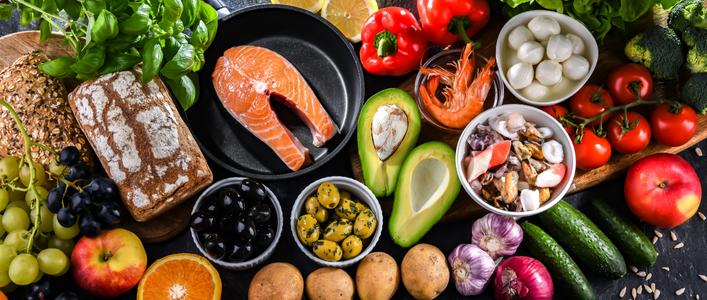
The Parisian plate may be cosmopolitan — sushi today, Moroccan tagine tomorrow — but it is mostly built on whole ingredients. Bread, cheese, leafy greens, lentils, fish, seasonal fruit. Even fast food in Paris tends to resemble real food: a warm slice of quiche or a baguette sandwich made earlier that morning.
This palette of choices reflects the Mediterranean diet, one of the most well-studied and consistently health-supportive models in nutrition science.
With its emphasis on fresh produce, olive oil, legumes, whole grains, and moderate wine, the Mediterranean diet has been linked to lower rates of heart disease, type 2 diabetes, and cognitive decline.
In contrast, ultra-processed foods (those long-shelf-life items built from additives and industrial ingredients) are on the rise globally, and closely associated with increased risk of obesity, inflammation, and chronic illness.
The Parisian model doesn’t resist this entirely, but it does counter it with a set of cultural brakes: a preference for quality, a reverence for simplicity, and a culinary tradition that favors real food over engineered convenience.

Portion and Pleasure: The Art of Enough
There’s a saying that in France, you can eat anything, just not everything — and certainly not all at once. Parisians tend to eat modest portions, but they do so with delight. A thin slice of cheese with a crusty end of baguette. A square of dark chocolate after lunch. A glass of wine, not two.
This isn’t about restriction. In fact, it’s the opposite. Parisian eating invites presence: to taste, to texture, to the satisfaction of being just full enough. The cultural norm isn’t abstinence but balance, a lesson modern nutritional psychology continues to underline.
Research on mindful eating (eating slowly, without distraction, and tuning into hunger and fullness) shows strong associations with better digestion, improved mood, and lower rates of emotional eating.
These are practices that many Parisians engage in, not as trends, but as inherited habits. The lunch hour isn’t rushed; the dinner table is set; the phone stays in the bag. Meals are lived in full.

Policy and Sustainability: A Smart Revolution
While much of Parisian food culture is rooted in tradition, it continues to evolve under the influence of new policy and public awareness. In 2023, the French government introduced the bonus réparation, an initiative designed to reduce consumer waste by encouraging the repair of household items.
While seemingly unrelated to food, this initiative reflects a larger cultural value: sustainability, care, and a preference for the enduring over the disposable.
These same values are shaping the way Parisians approach their kitchens: choosing tools that last, buying food that supports local farmers, and avoiding waste where possible. Sustainability here isn’t flashy; it’s folded into daily life, often in simple but habitual ways.
The Resilient Heart of the Parisian Table
The Parisian table holds many contradictions: tradition and modernity, indulgence and restraint, accessibility and aspiration. But we can agree that shared meals do matter. That what we eat, and how we eat it, shapes not just our health, but our days, our communities, and our sense of self.
From the markets to the plate, from policy to pleasure, the food culture of Paris is a living system, and it adapts to new waves exactly how Parisians do: without losing its soul. Even as it welcomes global flavors and digital distractions, the city continues to guard something sacred:
the meal as a moment of connection, a thread in the fabric of daily life.
It might be the fromage. Or the baguette. But I dare say, what Paris offers is true nourishment — through rituals that make us pause, notice, and taste.
Written, with love, from the desk of,
Anna, the Lantern Keeper

References
ANSES – Agence nationale de sécurité sanitaire de l’alimentation, de l’environnement et du travail. (2022). Actualisation des repères alimentaires du PNNS : recommandations pour les adultes. Retrieved from https://www.anses.fr
Gouvernement de la République Française. (2023). Le bonus réparation pour une consommation durable. Retrieved from https://www.service-public.fr
Ministère de la Transition Écologique. (2023). Le bonus réparation : consommer mieux, jeter moins. Gouvernement de la République Française. Retrieved from https://www.ecologie.gouv.fr
PNNS – Programme National Nutrition Santé. (2023). Manger Bouger : les repères nutritionnels pour les adultes. Retrieved from https://www.mangerbouger.fr
Monteiro, C. A., Moubarac, J.-C., Cannon, G., Ng, S. W., & Popkin, B. (2013). Ultra‐processed products are becoming dominant in the global food system. Obesity Reviews, 14(S2), 21–28. https://doi.org/10.1111/obr.12107
Ville de Paris. (2023). Plan alimentation durable 2022–2027. Retrieved from https://www.paris.fr

 Lantern Notes
Leave a comment