
The Lantern Keeper | June 27, 2025
In a city where meals still carry the meaning of ritual, structure, and connection, the Parisian way of eating may seem like a cultural curiosity. But it is much more than that.
A Culture at the Table
“La table est l’entremetteuse de l’amitié.” — French proverb
Paris has long been celebrated for its culinary heritage, where meals are more than moments of nourishment, but rituals that structure daily life and foster belonging. In today’s bustling, diverse city, these traditions evolve, responding to changes in socioeconomic circumstances, work patterns, and lifestyles. Beneath its bustling cafés and timeless boulangeries lies a social fabric woven from traditions of communal eating, heritage and evolving habits.
In this article, we’ll look at what science reveals about the Parisian approach to food, and why adopting even a few of these habits might offer more than just pleasure. It can also nurture resilience.
Eating in Rhythm: Meals that Shape the Day
In Paris, meals are more than nourishment — they are rhythm, ritual, and social glue.
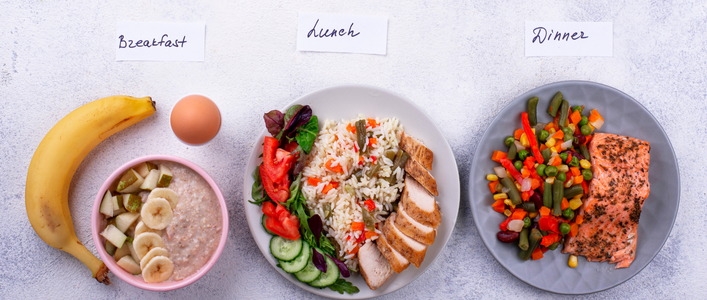
Twenty‑five years ago, long family lunches and well-defined mealtimes were central to Parisian life. Four out of five residents followed the traditional three-meal pattern: breakfast, lunch, and dinner, each serving as a reliable anchor in the day.
Today, however, this structure is shifting toward a more fragmented model. A quarter of Parisians — particularly younger, economically active individuals, and socioeconomically vulnerable groups, such as women, and foreign-born residents — are more likely to skip meals, especially breakfast and eventually opt for quick lunches.
This shift reflects broader global changes in work and lifestyle patterns, urban stress, and mobility, challenging long‑held traditions while still preserving meals as spaces of connection and resilience.
The interplay between heritage and modern demands is palpable across cafés and restaurants, where Parisians adapt long‑standing rituals to new realities. Still, the overall picture remains promising.
According to an ongoing long-term sociological health survey, about 66% of Parisians maintain the traditional three-meal rhythm.
This continuity helps structure daily life, shaping everything from work hours to social gatherings.
Contrast this with many modern urban lifestyles, where meals are often rushed, skipped, or replaced with snacks.
In Paris, lunch is timed thoughtfully — not too rushed, not too late. This cultural habit aligns beautifully with what science now confirms: our bodies process food more efficiently when we eat in the first part of the day, and giving our digestion a rest in the evening supports overall health.
Our bodies run on a circadian rhythm, a natural 24-hour cycle that governs not only sleep but digestion, hormone levels, and metabolism.
Research in chrononutrition suggests that eating meals at consistent times — especially earlier in the day — helps regulate blood sugar, optimize energy levels, and support healthy digestion. In contrast, irregular or late eating patterns have been linked to metabolic disturbances and increased stress on the body.
In Paris, even a weekday lunch is treated as a meaningful pause. Science supports the value of this rhythm: studies on circadian biology show that regular mealtimes help regulate metabolism, stabilize blood sugar, and support digestive health. Eating in rhythm with our internal clocks isn’t just tradition, it’s smart biology.
Meals as Ritual: The Social Framework of Eating
“Meals are central to the social bond in France, serving as moments where family, friends, and colleagues come together to reaffirm connections and belonging”— Jean-Claude Kaufmann, La Trame Conjugale (1992)
French sociologist Jean-Claude Kaufmann famously noted that meals in France are “central to the social bond” — a time not merely to refuel, but to reconnect.
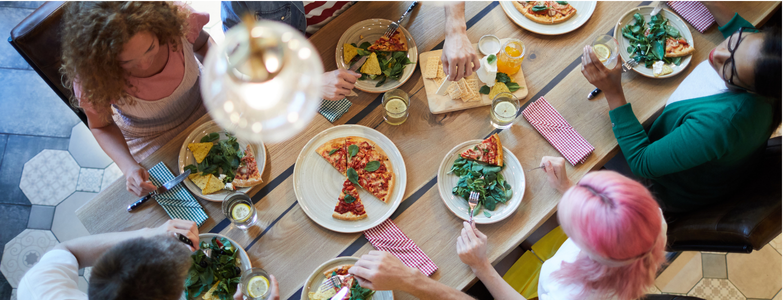
Parisian eating culture still values shared meals, even in workplace settings, where lunch is often a communal, not solitary, act. Whether around the family dinner table, in workplace cafeterias, or at sidewalk cafés, eating remains a fundamentally shared experience.
Even in professional settings, lunch is often treated as a communal pause. Many offices provide subsidized canteens or encourage stepping out for a proper meal with colleagues, reinforcing not only team cohesion but also work-life balance.
According to the Baromètre Malakoff Humanis (2023), over 60% of French employees view the midday meal as a social ritual, not just a nutritional one.
Shared meals also serve as a cornerstone of family life. Several dietary surveys found that French children and adolescents who regularly eat dinner with their families report greater emotional well-being and healthier dietary habits.
These mealtimes offer a built-in forum for conversation, emotional check-ins, and the passing down of cultural values — a ritual of presence in a world often fragmented by screens and schedules.
Researchers have also found that adolescents who eat with their families at least five times a week are less likely to engage in risky behaviors and more likely to report feeling “seen” at home.
Studies in social epidemiology also support these traditions. Regular shared meals are associated with improved mental health, stronger intergenerational relationships, and even better academic and professional outcomes.
In community contexts, too, meals continue to foster connection. Communal dining initiatives — like cantines solidaires or neighborhood food events — have emerged as responses to urban loneliness, offering not only nourishment but companionship, especially for the elderly and low-income populations. The French Red Cross and Secours Catholique have emphasized the role of shared meals in social reintegration efforts.
Though modernization and economic shifts have reshaped traditional habits, these rituals endure. The previously mentioned SIRS Cohort studies document an increasingly flexible approach to meals in urban Paris, especially among younger or economically vulnerable groups.
Yet despite these shifts, eating remains what Kaufmann calls a “cornerstone of belonging” (2007), one that continues to draw people together across generations, income levels, and lifestyles.
In Paris, to eat well is not just to eat slowly or beautifully — it’s to eat with. It is this “with-ness,” repeated day after day, that nourishes not just bodies, but bonds.
Meals with Meaning: The Spirit Behind the Structure
In Paris, food is never just food.
It’s timing, company, memory, and care. The Parisian rhythm — not rigid, but intentional — offers a different kind of nourishment. One that feeds not only the body, but a sense of place, presence, and connection.
In this first part, we’ve explored the when and why of eating in Paris: the lively rituals, the rhythms of the day, and meals as moments of meaningful connection.
In Part II, we’ll move from the table’s rhythm to its offerings: the foods themselves — their textures, tastes, and the quiet philosophy behind how they’re prepared, served, and shared. Beyond croissants and confit, we’ll look at what research tells us about the health behind the pleasure.
Whether you’re curious about nutrition or simply love food with a story, I invite you to continue this journey.
Because in Paris, a meal is never just a meal — it’s a mirror of the day, the season, the self.
Until then, perhaps remember this:
Meals aren’t only made in kitchens — they’re shaped by pauses, patterns, and people.
Written, with love, from the desk of,
Anna, the Lantern Keeper

References
Baromètre Malakoff Humanis. (2023). Baromètre Malakoff Humanis 2023. Paris: Malakoff Humanis.
De Saint Pol, T. (2005). Le repas en France: état des lieux à la fin du XXe siècle. Économie et Statistique, INSEE. Retrieved from https://www.insee.fr
INCA 3. (2017). Étude individuelle nationale des consommations alimentaires. ANSES.
INSERM. (2021). Nutrition and adolescent health. Paris: INSERM.
Kaufmann, J.-C. (1992). La trame conjugale: Analyse du couple par son linge. Paris: Nathan.
Kaufmann, J.-C. (2007). La soupe et le tableau. Paris: Armand Colin.
Kaufmann, J.-C. (2019). Identité en cuisine. Paris: Armand Colin.
Lalloué, B., et al. (2013). Patterns of meal timing and social disparities in Paris. Revue d’Épidémiologie et de Santé Publique, 61(5), 395–404. Retrieved from https://www.sirsc.fr
Ministère de la Transition Écologique et de la Cohésion des Territoires. (2023). Le Bonus Réparation. Retrieved from https://www.ecologie.gouv.fr/bonus-reparation
OECD. (2022). Health at a glance: Europe. OECD Publishing.
OECD. (2023). Health at a glance 2023. OECD Publishing.
SIRS Cohort Study. (2010). Sciences sociales et santé. INSERM.
SIRS Cohort Study. (2010–2020). Système d’information sur les risques sociaux (SIRS). Retrieved from https://www.sirsc.fr

 Lantern Notes
Leave a comment